
AI in Marketing: From Fragmented Data to Accurate Insights
In recent years, AI (artificial intelligence) has no longer been a foreign concept to many people. AI is increasingly present in everyday life and has quickly become a familiar tool in marketing activities. For many businesses and marketing agencies, the question is no longer “should we use AI?” but rather “how should we use AI to create real value?”

AI does not replace marketers—it helps them filter data
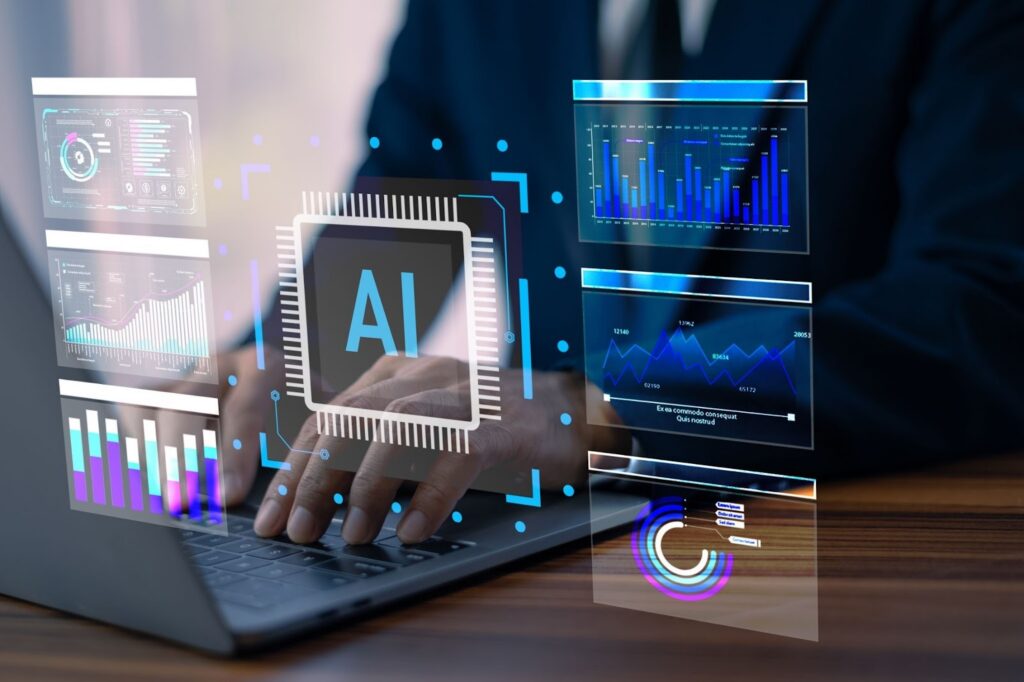
Today’s marketers are not short on data; the real challenge lies in identifying meaningful insights among countless fragmented signals from digital channels, social media, CRM systems, and offline touchpoints. Through its strategic support role, AI helps process massive volumes of data, detect patterns and trends, and focus attention on the most valuable signals. Instead of making intuition-based decisions, marketing teams and marketing agencies can rely on predictive analytics to optimize strategies, allocate budgets more effectively, and improve communication performance.
AI – its power lies in the unseen layers
When people think of AI, they often associate it with chatbots or automated content generation tools. However, the greatest value of AI lies in less visible layers, such as behavioral prediction: traffic volume, churn, return visits, and customer conversion rates. At the same time, AI helps optimize the customer journey by identifying which touchpoints truly drive impact. For marketing agencies, AI acts as a behind-the-scenes analytical foundation, enabling teams to focus more on strategy, creativity, and data storytelling—areas that machines cannot replace.
Benefits go hand in hand with challenges
While the benefits of AI in marketing are undeniable, several challenges remain. AI only delivers real value when it is trained and operated by teams with the right knowledge and expertise, as AI tools themselves still have inherent limitations. In addition, the quality of input data directly affects the accuracy of analytical outcomes, and issues related to privacy, security, and data ethics increasingly require businesses to adopt AI in a cautious and responsible manner.
AI in marketing is a critical tool that helps marketing agencies make more accurate decisions in the data-driven era. When applied correctly and combined with human strategic thinking, AI becomes a powerful lever for building sustainable and long-term marketing effectiveness.
Có thể bạn cũng quan tâm